

“How long until it’s healed?” is the question almost every new piercing comes with. The honest answer is that it depends on where the piercing is, what the tissue is like, and how the first few months go. A piercing in soft, well-supplied tissue like an earlobe heals in weeks. A piercing through ear cartilage or across a flat surface of skin can take a year or more.
This guide puts the typical healing times for the most common piercings in one place, so you can plan ahead and know what to expect.
Why healing times vary so much
Three things make the biggest difference:
- Tissue type. Soft tissue with good blood flow (lobes, lips, tongue) heals faster than cartilage, which has very little blood supply.
- Movement and pressure. Piercings that get bumped, slept on, or rubbed by clothing take longer. Navel and cartilage piercings are classic examples.
- Your body and your aftercare. Health, sleep, stress and how gently you treat the piercing all play a part. Two people with the same piercing can heal on very different timelines.
One more thing to know: a piercing often looks healed on the outside long before the channel inside is fully healed. That’s why the ranges below can feel longer than you expect.
Piercing healing times chart
These are typical ranges based on guidance from professional piercers and health sources. Your piercer can give you a better estimate for your own piercing.
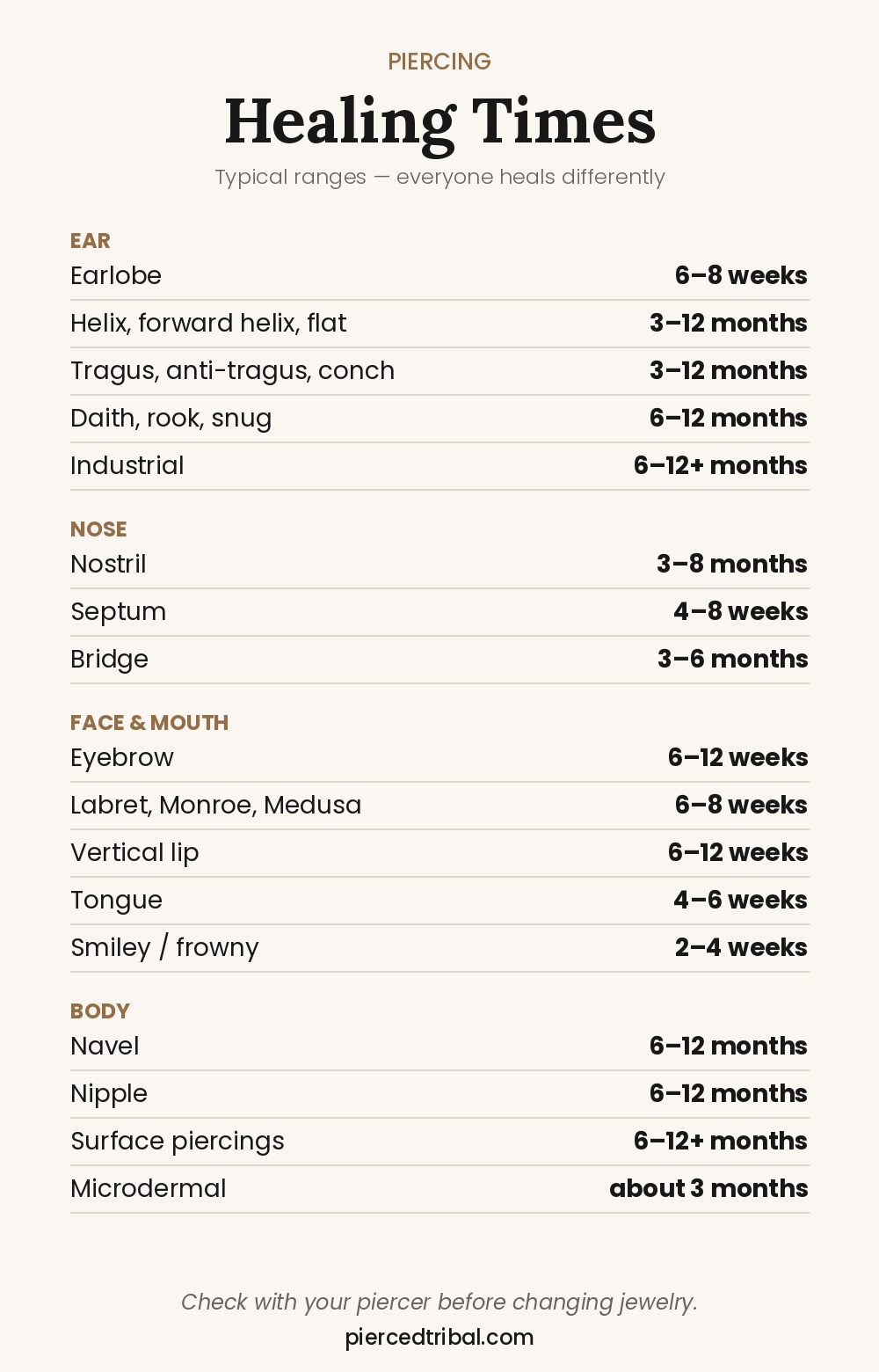
| Piercing | Typical healing time |
|---|---|
| Ear | |
| Earlobe | 6 to 8 weeks |
| Helix, forward helix, flat | 3 to 12 months |
| Tragus, anti-tragus, conch | 3 to 12 months |
| Daith, rook, snug | 6 to 12 months |
| Industrial (two holes, one bar) | 6 to 12 months or longer |
| Nose | |
| Nostril | 3 to 8 months |
| Septum | 4 to 8 weeks |
| Bridge | 3 to 6 months |
| Face and mouth | |
| Eyebrow | 6 to 12 weeks |
| Labret, Monroe, Medusa | 6 to 8 weeks |
| Vertical lip | 6 to 12 weeks |
| Tongue | 4 to 6 weeks |
| Smiley / frowny | 2 to 4 weeks |
| Body | |
| Navel (belly button) | 6 to 12 months |
| Nipple | 6 to 12 months |
| Surface piercings (nape, hip, surface tragus and others) | 6 to 12 months or longer |
| Microdermal | About 3 months |
Signs a piercing is still healing
During healing, some things are normal and expected:
- Mild redness or tenderness around the piercing, especially in the first weeks
- Some swelling at the start (oral piercings swell the most in the first few days)
- Clear or whitish fluid that dries into “crusties” around the jewelry
- Itching as the skin repairs
- Tenderness coming back for a day or two after a bump or snag
A piercing is usually considered healed when it’s no longer tender, there’s no discharge or crust, and the jewelry moves without discomfort. Even then, many piercers suggest waiting a little longer before switching to a different style of jewelry.
When to get it checked
Some symptoms aren’t part of normal healing. See a piercer or a doctor if you notice:
- Spreading redness, heat or swelling that gets worse instead of better
- Thick yellow or green discharge, or a bad smell
- Fever or feeling unwell
- Jewelry sinking into the skin or the piercing moving out of place
If you think a piercing may be infected, don’t take the jewelry out on your own. Removing it can let the hole close over the problem. Get advice first. Our older guide on signs your piercing may be infected goes into more detail.
Tips for a smoother heal
- Hands off. Don’t twist or turn the jewelry. Only touch it with clean hands when cleaning.
- Keep it simple. Most piercers recommend a sterile saline spray once or twice a day and nothing harsher.
- Watch your sleep. Try not to sleep on a new ear piercing. A travel pillow can help keep pressure off.
- Mind snags. Hair, towels, headphones, masks and tight waistbands are the usual culprits.
- Be patient with jewelry changes. Changing jewelry too early is one of the most common reasons healing gets set back.
Can you speed up healing?
Not really, and trying to rush it usually backfires. What you can do is avoid the things that slow it down: irritation, pressure, harsh cleaning products and early jewelry changes. A good piercer, good placement and steady aftercare do more than any shortcut.
The bottom line
Lobes, lips, tongue and septum piercings tend to heal in weeks. Nostril and eyebrow piercings take a few months. Cartilage, navel, nipple and surface piercings often take six months to a year, sometimes more. Use the chart as a guide, listen to your body, and check with your piercer before you change your jewelry.


