
If your piercer told you to “come back to downsize,” you’re not alone in wondering what that means. Downsizing is one of the most important steps in healing a new piercing, and one of the most skipped. Here’s what it is, when it usually happens, and why it’s worth the extra visit.
What does downsizing mean?
When you get pierced, your piercer uses a longer bar or post than you’ll need long term. That extra length leaves room for the swelling that almost every new piercing goes through in the first days and weeks.
Once the swelling goes down, that extra length isn’t needed anymore. Downsizing simply means swapping the starter bar for a shorter one that fits the piercing as it is now. The style can stay exactly the same. It’s the length that changes.
Downsizing is not the same as changing your jewelry for a new look. Switching to a hoop or a different style is a separate step that usually comes later, once the piercing is further along.
Why downsizing matters
A bar that’s too long for a healed-down piercing moves around more than it should. That extra movement can cause problems:
- Snagging. Longer bars catch on hair, clothing, pillows, towels and headphones.
- Irritation bumps. Constant movement and pressure are among the most common causes of bumps around a piercing.
- Angle problems. A long bar can lean and put pressure on one side, which may cause the piercing to shift or heal at an angle.
- Oral damage. In tongue and lip piercings, a long bar is more likely to rub or knock against teeth and gums.
- Slower healing. All of the above can add weeks or months to how long a piercing takes to settle.
When do you downsize?
Timing depends on the piercing and on how your body heals. These are typical ranges from professional piercers. Your piercer will tell you what’s right for you.
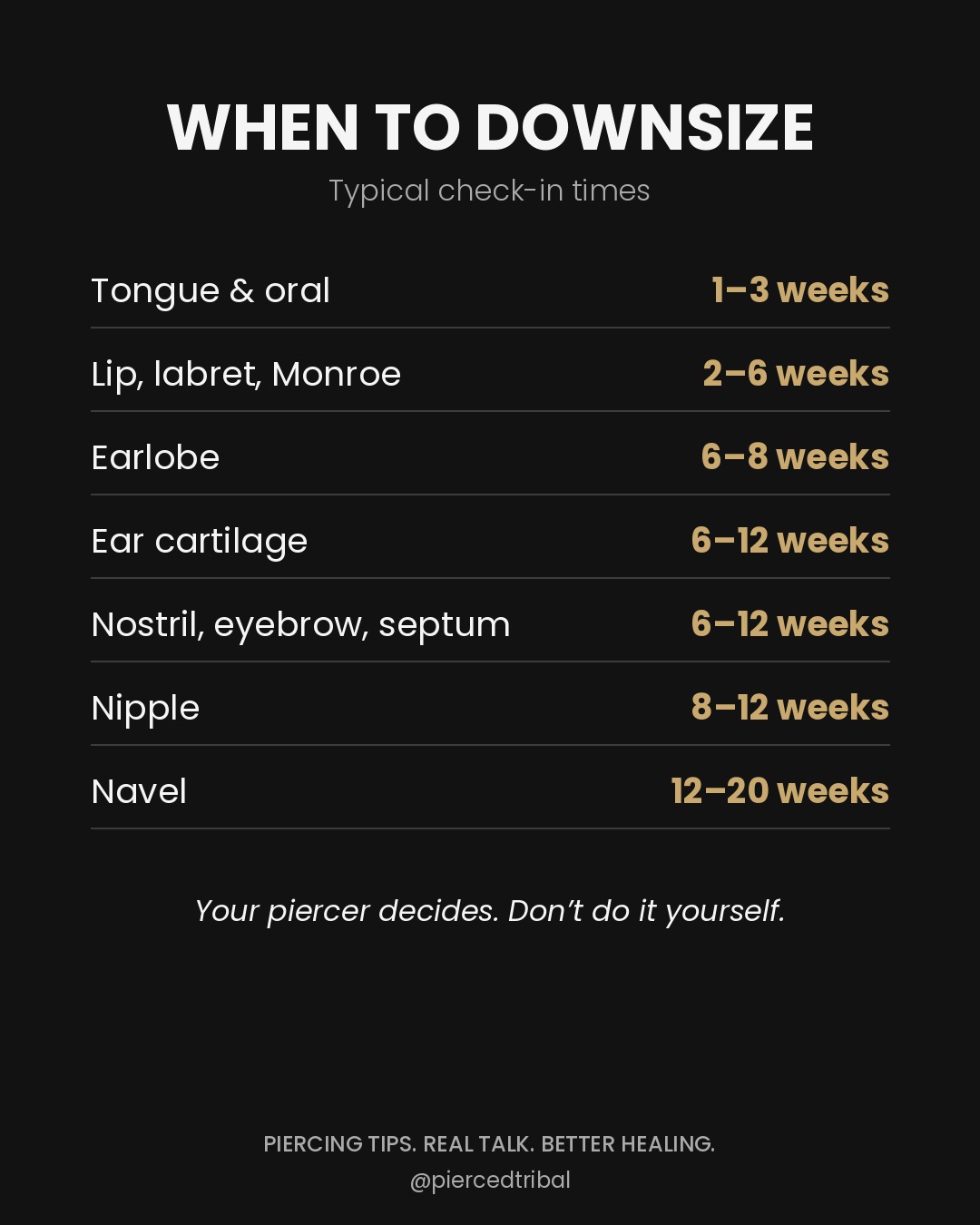
| Piercing | Typical downsize check |
|---|---|
| Tongue and other oral piercings | About 1 to 3 weeks, once the early swelling settles |
| Lip, labret, Monroe, Medusa | About 2 to 6 weeks |
| Earlobe | About 6 to 8 weeks |
| Ear cartilage (helix, tragus, conch and others) | About 6 to 12 weeks |
| Nostril, eyebrow, septum | About 6 to 12 weeks |
| Nipple | About 8 to 12 weeks |
| Navel | About 12 to 20 weeks |
Downsizing usually happens long before a piercing is fully healed. Use our piercing healing times chart to see how long full healing usually takes.
Signs it may be time
- Swelling has gone down and the area looks calm
- You can see more of the bar sticking out than when you were first pierced
- The jewelry catches on things more often
- There’s no fresh bleeding or thick discharge
- You’ve reached the check-in time your piercer gave you
If the jewelry still feels snug or the piercing is still swollen, it’s usually too early. Waiting a little longer is better than downsizing too soon.
Who should downsize your piercing?
Your piercer. A new piercing can look settled on the outside while it’s still healing inside, and changing jewelry without the right tools and clean technique can irritate it or set healing back. A piercer can measure the piercing, choose the right length, and swap the bar quickly with as little trauma as possible.
Many studios do a downsize check as part of the original appointment, sometimes for only the cost of the new bar. Ask about it when you get pierced so you know when to come back.
What to expect after downsizing
It’s normal for a piercing to be a little tender for a day or two after a jewelry change. Some mild redness or crusting can come back briefly. Keep up your usual gentle aftercare and avoid touching or twisting the new bar.
See a piercer or a doctor if you notice swelling that keeps getting worse, increasing pain or heat, spreading redness, or thick yellow or green discharge.
The bottom line
Downsizing is a small step that makes a big difference. Your first bar is made for swelling. Once the swelling is gone, a shorter bar keeps the piercing stable, snags less and gives it the best chance to heal straight and comfortably. Ask your piercer when to come back, and don’t skip that visit.